Brand Design Book: Logos, Typography & 110 Case Studies
Couldn't load pickup availability
Share
Form, color, and typography, alongside values and vision, can make or break a brand.
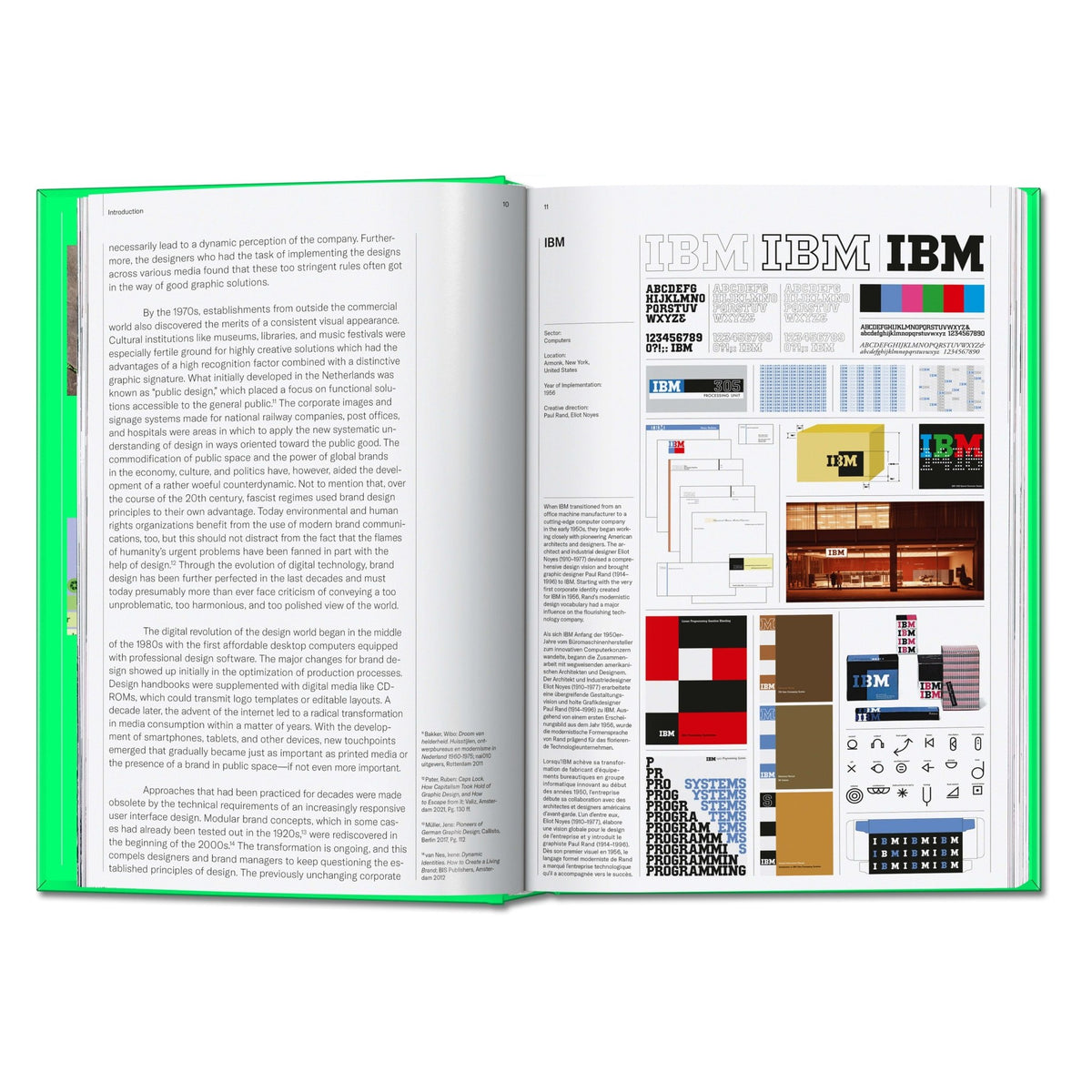
The Elements of Brand Design is TASCHEN's deep look at how that works in practice. It explores the design elements of renowned corporations in 110 case studies, showing how clever branding turns companies into things people want for their own sake. The examples include brands like Nike, Burger King, and Uniqlo, names that have become desirable in their own right largely because of how they look, sound, and behave.
The book is framed by an interview with Paula Scher and Michael Bierut of Pentagram, two of the most influential designers working in identity today. Their perspective sets the tone: branding is not decoration added at the end, it is a system of decisions about form, color, type, and voice that has to hold up everywhere a brand shows up.
What makes a book like this useful is the breadth. One hundred and ten case studies means you can see patterns: how a mark scales from an app icon to a storefront, how a palette becomes ownable, how a typeface carries personality, and how a system flexes without falling apart. It is the kind of reference you open for one answer and close an hour later with ten new ideas.
It also works as a reality check. The brands in these pages were built by teams solving real constraints, and seeing their systems laid out side by side is one of the fastest ways to sharpen your own eye.
In Signals, this is a studio book. Keep it near the desk, open it before a brand kickoff, and leave it out for clients.
Why brand design still matters
Brand design still matters because people experience companies through form, color, and typography long before they read a word of strategy. The strongest identities, like those of Nike, Burger King, and Uniqlo, show that a well-built visual system can make a brand desirable on its own terms. Understanding those systems is core craft for anyone who designs for a living.
Who this book is for
For brand designers, graphic designers, art directors, creative directors, marketers, and design students. For the RIOT and vandal_ crowd who build identities, campaigns, and content for clients, and for anyone who wants to understand why some brands feel inevitable and others never stick.
Product details
- Title: The Elements of Brand Design
- Subject: Brand identity and design systems
- Publisher: TASCHEN
- Languages: German, French, English
- Inside: 110 case studies of renowned corporations, framed by an interview with Pentagram's Paula Scher and Michael Bierut
- Brands featured include: Nike, Burger King, Uniqlo
- Category: Graphic design, print book
FAQ
What is The Elements of Brand Design about?
It explores the design elements behind renowned corporations, from form and color to typography, values, and vision, across 110 case studies.
Who is interviewed in the book?
The book is framed by an interview with Pentagram's Paula Scher and Michael Bierut.
What languages is it in?
This edition is in German, French, and English.

+ [vandal_faq.sys]
intel/
What is vandal_?
A creative marketplace for the misfit class. We curate tools, gear, assets, fonts, streetwear and digital weapons for people rewriting the rules. No fluff. No permission. All signal.
What kind of stuff do you sell?
Display fonts. Glitch textures. Gradient payloads. Tools that hit. Hoodies, Zines, essays, assets, shirts that don’t ask. Everything is made by or curated by creators who choose to live outside the algorithm.
Is vandal_ royalty-free?
Yup. Buy it once. Use it in your work, client or personal. Don’t resell it or pretend you made it. That's the only rule.
How can I join the marketplace?
If you make dope, useful, weird, disruptive creative stuff, we want to see it. Drop us a line. We’re building this together.
Why does vandal_ feel different?
Because it is. This isn’t just commerce. It’s community, rebellion, and real creativity, all wrapped in downloadable, readable and wearable form.
-
Our Disposable World
A structural argument for commitment, accountability, and designing work that refuses to disappear.
Our Disposable World
A structural argument for commitment, accountability, and designing work that refuses to disappear.
-
Marking Space
A look at marking space, authorship, permanence, and why vandalism has always been about presence—not destruction.
Marking Space
A look at marking space, authorship, permanence, and why vandalism has always been about presence—not destruction.