History of Graphic Design Book: 130 Years, Posters & Corporate Identity
Couldn't load pickup availability
Share
130 years of graphic design, in one sweep.
In this volume, Jens Müller traces 130 years of graphic design, designers and developments, from the late 19th century through the economic boom after World War II and on until today. Year-by-year spreads are combined with in-depth features on dozens of landmark projects and profiles of industry leaders, so the book works as both a timeline and a series of close-ups.
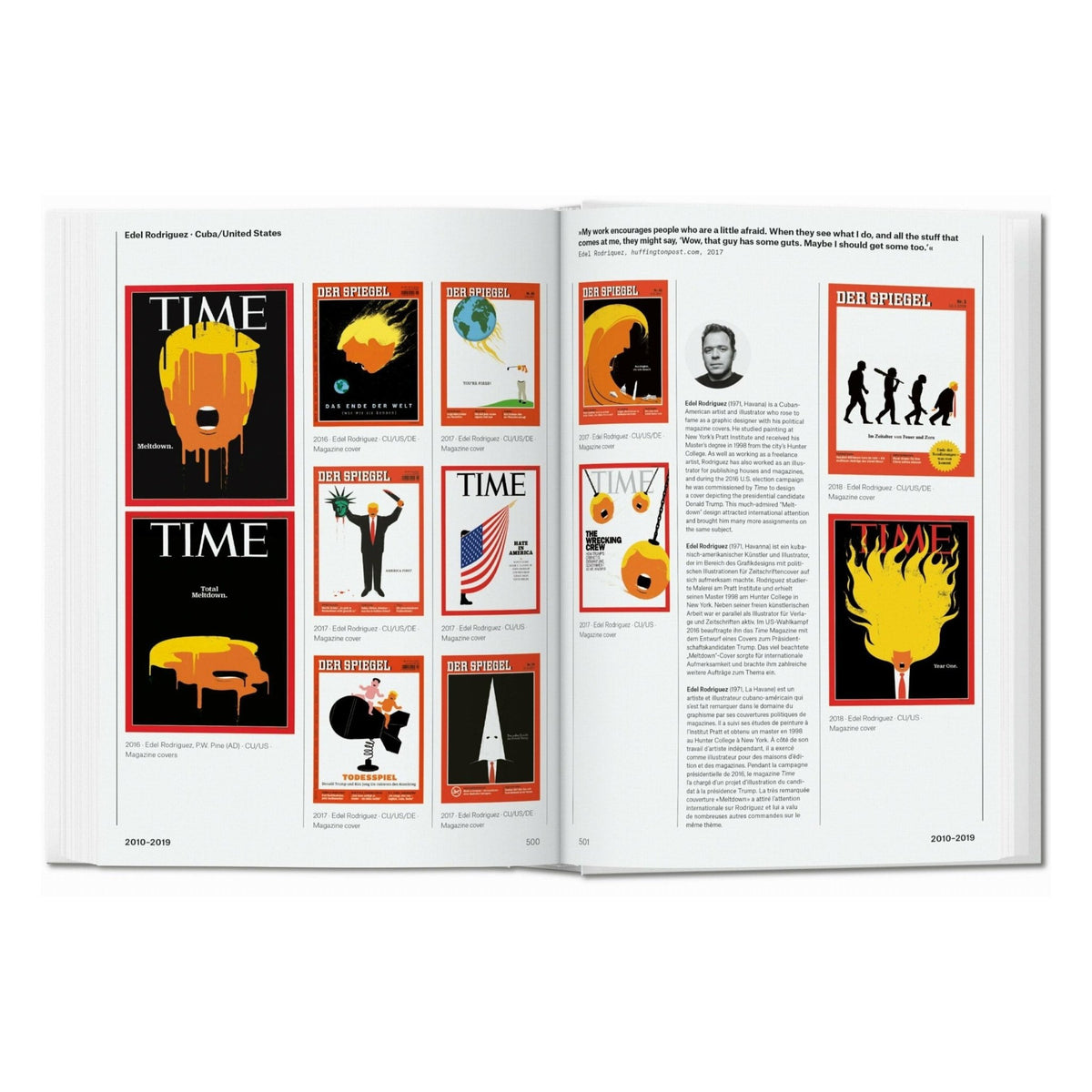
The spreads pictured here give a sense of the range: an 1890–1899 opener with early commercial posters and magazine covers, a 1929 spread of bold advertising, the Westinghouse and IBM identity programs, a psychedelic Dylan poster, the New York subway System Map, a 1972 spread that mixes film posters with logos for Atari and adidas, the Apple logo, and a run of TIME magazine covers. Posters, corporate identity, wayfinding, editorial design and branding all sit in one continuous story.
That continuity is the point. Graphic design is often taught as a list of movements and famous names, but seen year by year it looks more like a relay: ideas get handed off, reworked and handed off again. Decorative posters give way to modernist grids, grids give way to identity systems, and identity systems feed the visual culture we live in now. This book makes those handoffs visible.
In Signals, it is the one-volume overview we would hand to anyone starting out, and the one seasoned designers keep within reach.
Why graphic design history still matters
Every brief borrows from the past, and knowing where a look came from changes how you use it. A clear, chronological view of 130 years of design gives you the context to tell homage from cliché, to spot which ideas keep coming back, and to understand why some solutions have lasted for generations. It turns a mood board into an argument, which is where good creative work starts.
Who this book is for
For graphic designers, art directors, brand strategists, illustrators and students who want the whole arc of the discipline in one book. Filmmakers and motion designers will find period-accurate references for titles, posters and on-screen type. For the RIOT and vandal_ crowd, it is the family tree behind every logo, poster and campaign we touch.
Product details
- Title: The History of Graphic Design.
- Author: Jens Müller
- Publisher: TASCHEN
- Edition: 45th Ed.
- Period: The late 19th century until today
- Contents: Year-by-year spreads, in-depth features on dozens of landmark projects and industry-leader profiles
- Languages: German, French, English
FAQ
What period does this book cover?
It traces 130 years of graphic design, from the late 19th century through the economic boom after World War II until today.
Is it a good introduction to graphic design history?
Yes. The year-by-year spreads give a clear chronological overview, while features on landmark projects and profiles of industry leaders add depth.
What languages is the text in?
This 45th Ed. is trilingual, with text in German, French and English.

+ [vandal_faq.sys]
intel/
What is vandal_?
A creative marketplace for the misfit class. We curate tools, gear, assets, fonts, streetwear and digital weapons for people rewriting the rules. No fluff. No permission. All signal.
What kind of stuff do you sell?
Display fonts. Glitch textures. Gradient payloads. Tools that hit. Hoodies, Zines, essays, assets, shirts that don’t ask. Everything is made by or curated by creators who choose to live outside the algorithm.
Is vandal_ royalty-free?
Yup. Buy it once. Use it in your work, client or personal. Don’t resell it or pretend you made it. That's the only rule.
How can I join the marketplace?
If you make dope, useful, weird, disruptive creative stuff, we want to see it. Drop us a line. We’re building this together.
Why does vandal_ feel different?
Because it is. This isn’t just commerce. It’s community, rebellion, and real creativity, all wrapped in downloadable, readable and wearable form.
-
Our Disposable World
A structural argument for commitment, accountability, and designing work that refuses to disappear.
Our Disposable World
A structural argument for commitment, accountability, and designing work that refuses to disappear.
-
Marking Space
A look at marking space, authorship, permanence, and why vandalism has always been about presence—not destruction.
Marking Space
A look at marking space, authorship, permanence, and why vandalism has always been about presence—not destruction.